Looking Beyond “The Singapore Girl”
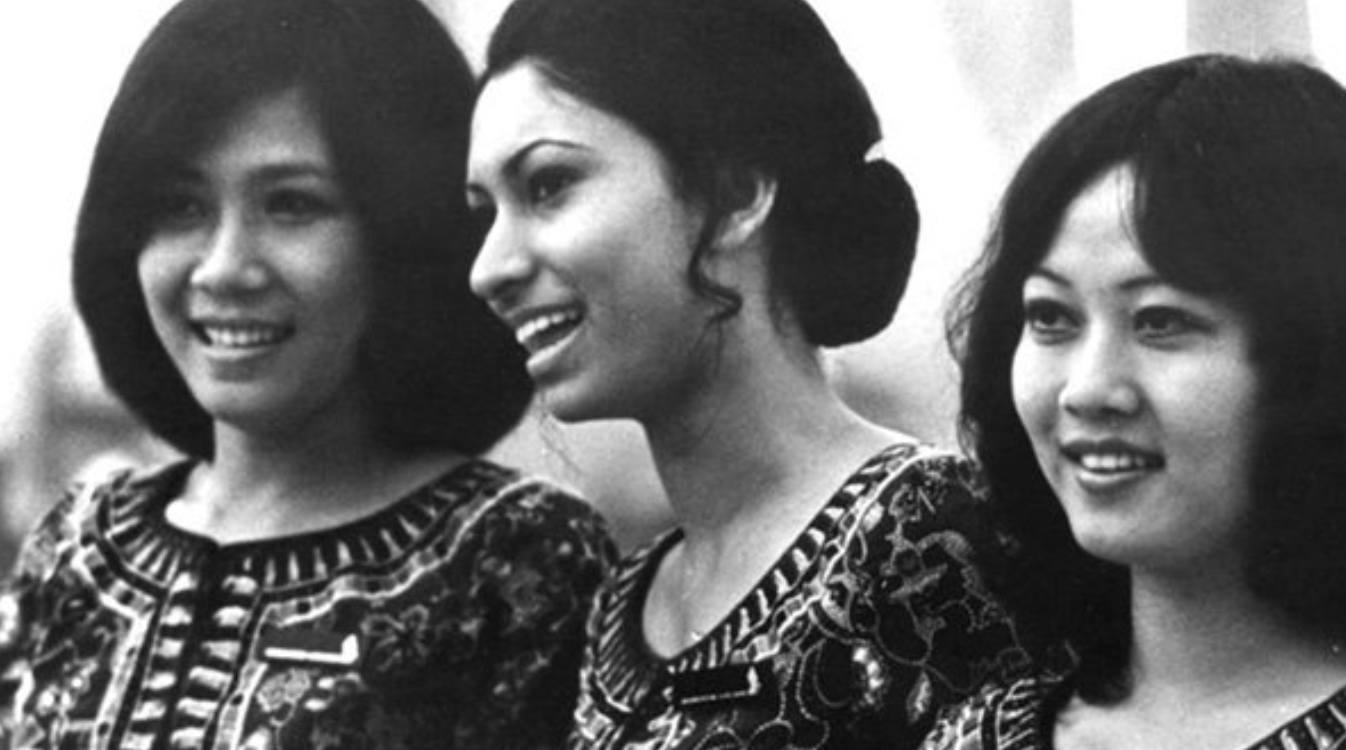
image via Singapore Airlines
*originally published on Peony Zine in 2022.
The Singapore Girl has been the face of Singapore Airlines since the 1970s. Her haute couture sarong kebaya is immediately recognisable, with the airline winning its fair share of awards in service and customer experience. The image of The Singapore Girl is deeply embedded in the company’s branding, with its website boasting her as a timeless beauty who embodies Asian hospitality. Critics have drawn attention to the emblematic Singapore Girl — and in response, there’s been an overbearing reluctance to let her go.
In today’s day and age where feminism runs rampant, the emblematic Singapore Girl may seem outdated. However, with the Singapore Girl so deeply ingrained in the airline’s marketing campaign, there seems to be little alternative as to what would replace her. Branding or not, a flight attendant’s job is so much more than just the glamour that we associate with the SIA girl. We wanted to investigate the role further; we hoped to celebrate these women, highlighting the more fulfilling aspects of the job beyond its associations in public discourse.

vintage Singapore Airlines ad
We spoke to two ex-Singapore Girls, Chloe and Suk Ye. Chloe left the field last year, while Suk Ye worked in the field in the early 90s. Their commentaries differed in many ways, presenting polarising opinions surrounding the emblematic Singapore Girl. Even though their experiences are placed some 30 years apart, the message behind the Singapore Girl remains unwavering.
Even though much has been written about the job, it’s still elusive to everyone outside of it. The exclusivity of the job is no secret; we know the girls have to possess a certain standard of physical fitness and characteristics. The media is peppered with reports about the gruelling training the girls go through before “earning their wings”. I asked how these perceptions compared to their experience, and both women shared that the training did indeed match such reports. Suk Ye shared that the security and medical training held as much weight as the service roles. She felt it unfortunate these “secondary” roles took more precedent, as it overrides “the sole purpose of what the Singapore Girl is actually for.” Chloe also noted the hierarchal environment of the field, but describes that most of her learning took place after the training. The opportunity to be exposed to different environments “helped hone my survival skills and taught me how to protect myself, which I’d say isn’t something most Singaporeans have to do because it’s just so safe here.”
The job covers such a large arena of skillsets and responsibilities — including their role as the safety/security team, the medical team, and the service crew. I asked which aspect of the job they defined as the main priority of their role. Chloe described excellent people management and communication skills as the most central part of the job. She states that keeping both the passengers and senior crew happy is at the core of the job, and if not, “all your other work may be for nought.” Suk Ye, however, cited safety and security as her main priority. She said, “[We] are, in essence, the first responders and caretakers of a flight and its passengers.” She then shared more about the extensive training they received, which included CPR and even childbirth. She also explained the various scenarios for which they are prepared, such as evacuations and what to do if passengers are uncooperative during an emergency.
It was heartwarming to hear Chloe’s anecdotes about her flying days, as she recalled to us, “I’ve lost count of the times I had to tend to a toddler for parents travelling alone while they eat or use the washroom. I love children, so this part was really enjoyable to me. I once had Elsa onboard with me who insisted on checking out the entire aircraft because she had never been on a plane — of course, I couldn’t say no to the Snow Queen, so I gave her a personal tour!” Chloe also recalls chatting with passengers during lull periods. She found it fulfilling to hear about different backgrounds and cultures. Suk Ye related a time when she was asked why there were so many crew members on a flight, even though it had a light load of passengers. They were surprised to learn that a required number of crew must man each emergency exit, and that assistance is crucial in passenger safety and evacuation.
Asian hospitality and beauty are located at the core of the Singapore Girl’s image. I asked how they felt regarding the reputation and stigma attached to this image. Chloe states, “I don’t really feel much for or against such stigmas and their reputation, since I haven’t personally experienced it directed at me.” She continues, “such a reputation comes with a lot of expectations though,” citing the pressures that come with the rigid standards of grooming. Suk Ye acknowledged the extent to which the Singapore Girl is a spokesperson of the airline, believing that hospitality is a great attribute to be selling. However, she states, “I think hospitality can be achieved without it having to be Asian, female, or associated with beauty. In today’s day and age, I think it is time they were given more respect and seen in a more ‘professional’ way.”
Suk Ye also drew my attention to the stories of Neerja Bhanot, who died saving three children on Pan Am Flight 73 (a flight hijacked by terrorists), or Patrisha Organo, who breastfed a passenger’s baby where the mother was unable to. She used these stories to exemplify the strength of women in these roles and the importance of mutual support between women — highlighting the practical and heroic capabilities of the women in the field.
I then asked what the Singaporean Girl would represent if it were up to them. Chloe hoped the Singapore Girl could be perceived as more approachable, as she feels the image results in a ‘cheerleader’ effect that makes them appear intimidating. She believes that appearing more approachable would humanise the crew. Suk Ye hoped more attention would be given to the safety training that the Singapore Girls are armed with. She wishes the Singapore Girl to be someone that blends “respectability, efficiency and professionalism.” She shared further that emphasis was placed on the exclusivity of the role during their training, alongside the fact they were chosen for it. She elaborated that in today’s day and age, she would encourage girls to acknowledge their power and capability beyond what is sold about beauty and exclusivity.
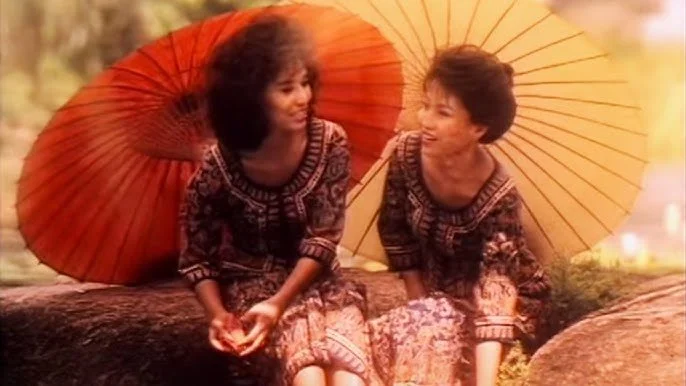
image via ‘Singapore Girl, You’re Always There’ TV ad 2002
To wrap it up, I asked what they found most fulfilling about the job. Chloe described the life skills that she picked up along the way; such as reading people’s behaviours, different eccentricities, and gaining street smarts. She also describes being more appreciative of life and the world, saying, “the world truly is a beautiful place, and knowing that I’m just a speck of dust in the universe helps put everything into perspective. I carry that with me all the time now.” Suk Ye states, “this profession had given me a lot of opportunities for self-discovery and knowing my own limits and boundaries. I have had to learn to be diplomatic and patient with people and it has also afforded me with a good sense of self-empowerment. All good attributes to take along and hone in life.”
The meaning of the Singapore Girl remains unwavering, but it is clear that there is more to her than what is portrayed in the media. I am very happy to be able to celebrate these women, and to hear about their experiences as our silent heroes.
